Autumn 2026 Operator Programme
Document the move-in. Win the move-out.
None of this works without the baseline. The condition delta, the dispute pack, and the damage flags all depend on a sealed move-in record existing first. That is why the programme starts now, not next summer.
How it works.
Three phases across two academic years. The case for starting now.
This programme runs longer than a typical software pilot - about a year, start to finish. That is not arbitrary. The entire product depends on a paired baseline: a move-in record sealed now, compared against a move-out record next summer. There is no way to shorten that and still prove the thing that matters - whether the record holds up in a dispute. If you want proof this works before renewing, this is the shortest path to it.
Setup - August 2026
Buildings configured, units and QR codes generated, team access provisioned. Optionally: pre-tenancy baseline scans before any student moves in.
No IT involvement. No PMS integration.
Move-in wave - September and October 2026
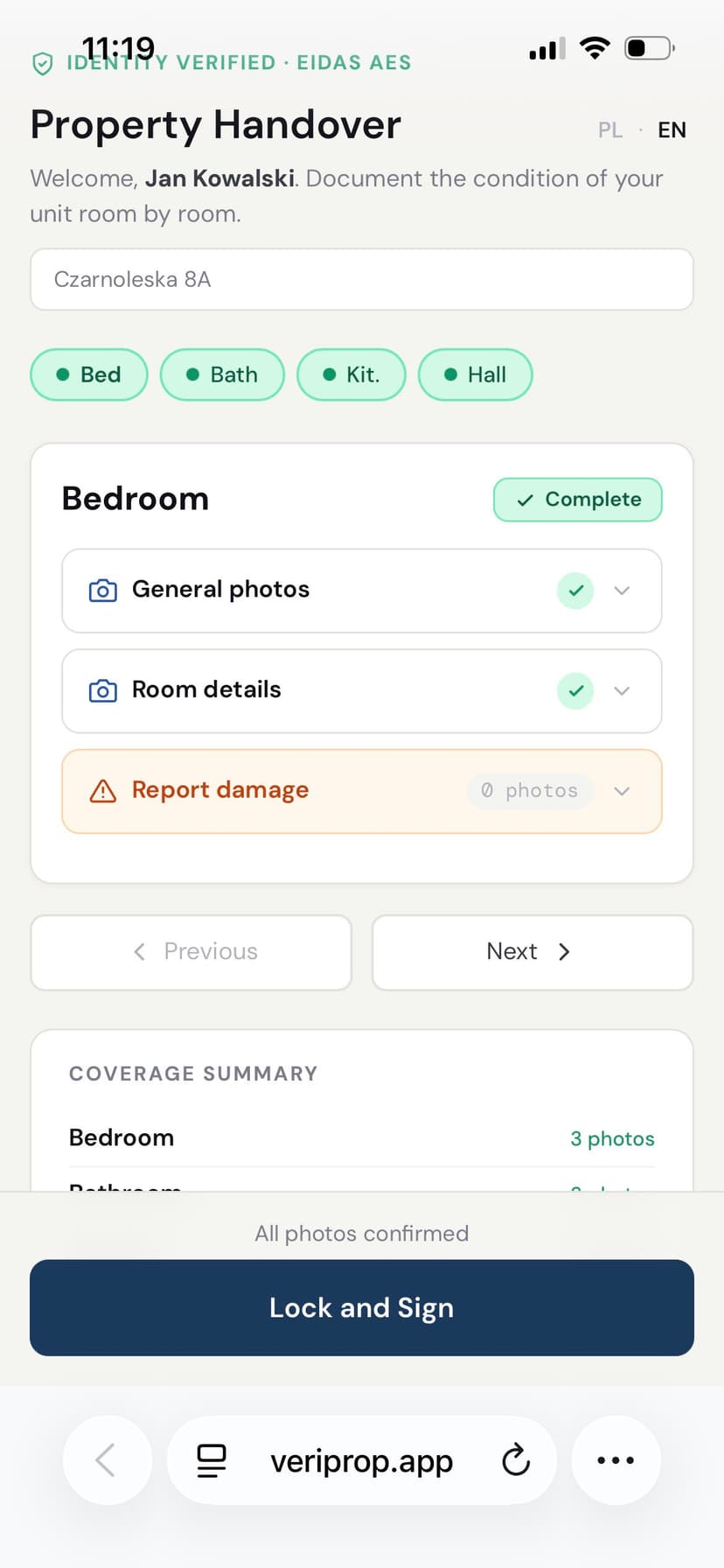
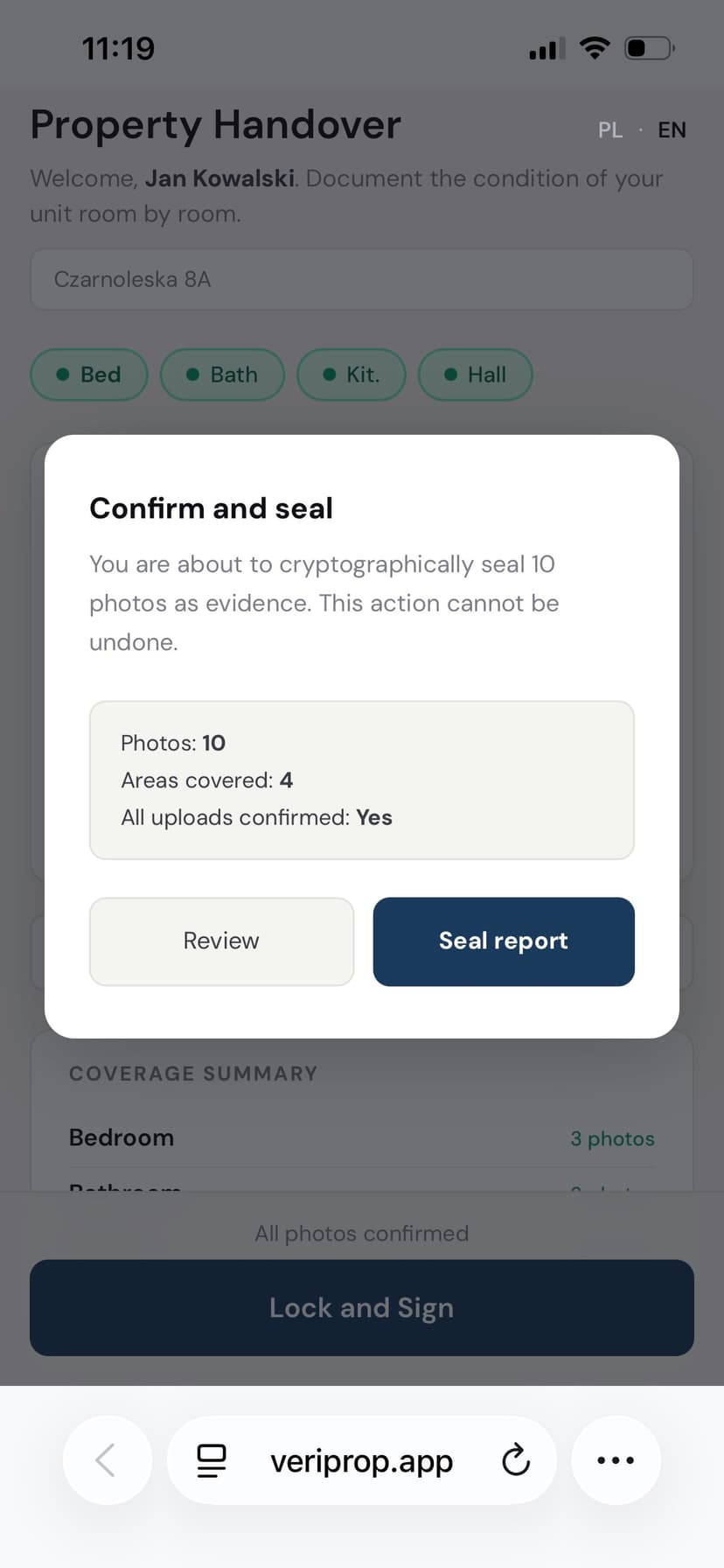
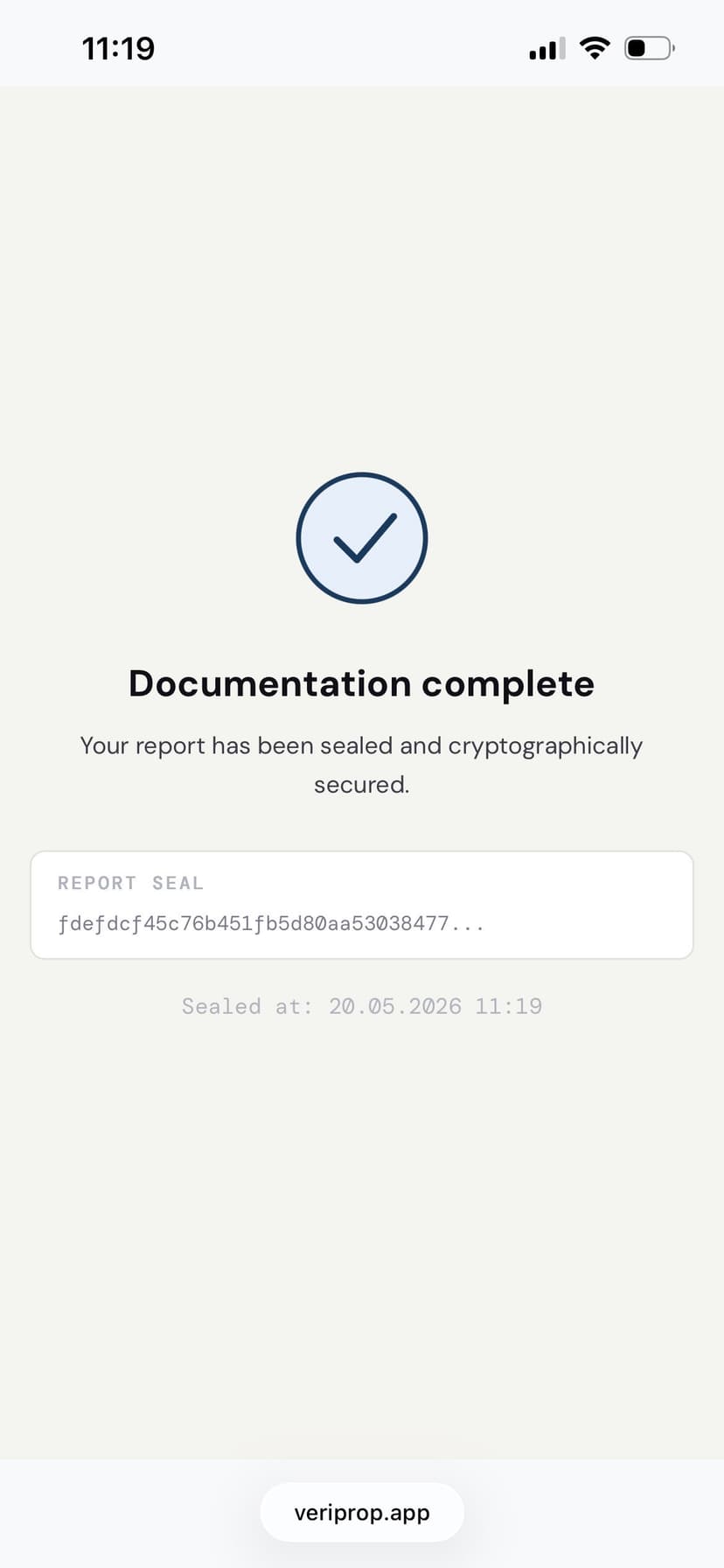
Each student scans the QR code in their room, photographs the condition, and the record is cryptographically sealed. This is the baseline. Every move-out dispute next year is settled against this record.
What this produces
A sealed move-in condition record per unit, stored in your dashboard. Timestamped and tamper-evident. Pre-existing damage is noted. The move-out team inherits a clear baseline.
Move-out wave - Summer 2027
The move-out condition is compared against the sealed move-in baseline. AI flags new damage. Pre-existing damage is automatically excluded. The dispute pack is generated in one click.
What this produces
A surface-by-surface condition delta per unit, a building intelligence report, and a PDF dispute pack for any unit where charges apply. The record your legal team will accept.
What lands in your hands.
Every sealed report includes the full photo evidence, viewable per unit in your dashboard.
Sealed move-in baseline per unit
Every documented unit produces a cryptographically sealed report. Timestamped, tamper-evident, and the foundation against which every move-out dispute next summer is resolved.
Pre-existing damage on record
Any damage noted at move-in is recorded and excluded from move-out claims automatically. The operator cannot be charged for what was already there. The tenant cannot deny what was.
Building condition intelligence
After each wave, a building-level condition summary is generated: unit ratings, flagged units, expected workload. Your briefing document for the refurbishment cycle.
Dispute pack per report
One click exports any sealed report as a PDF dispute pack: hash chain values, per-room condition summary, the condition delta against move-in, and the ticket history of the tenancy. The document you hand to a lawyer.
What your tenants see.
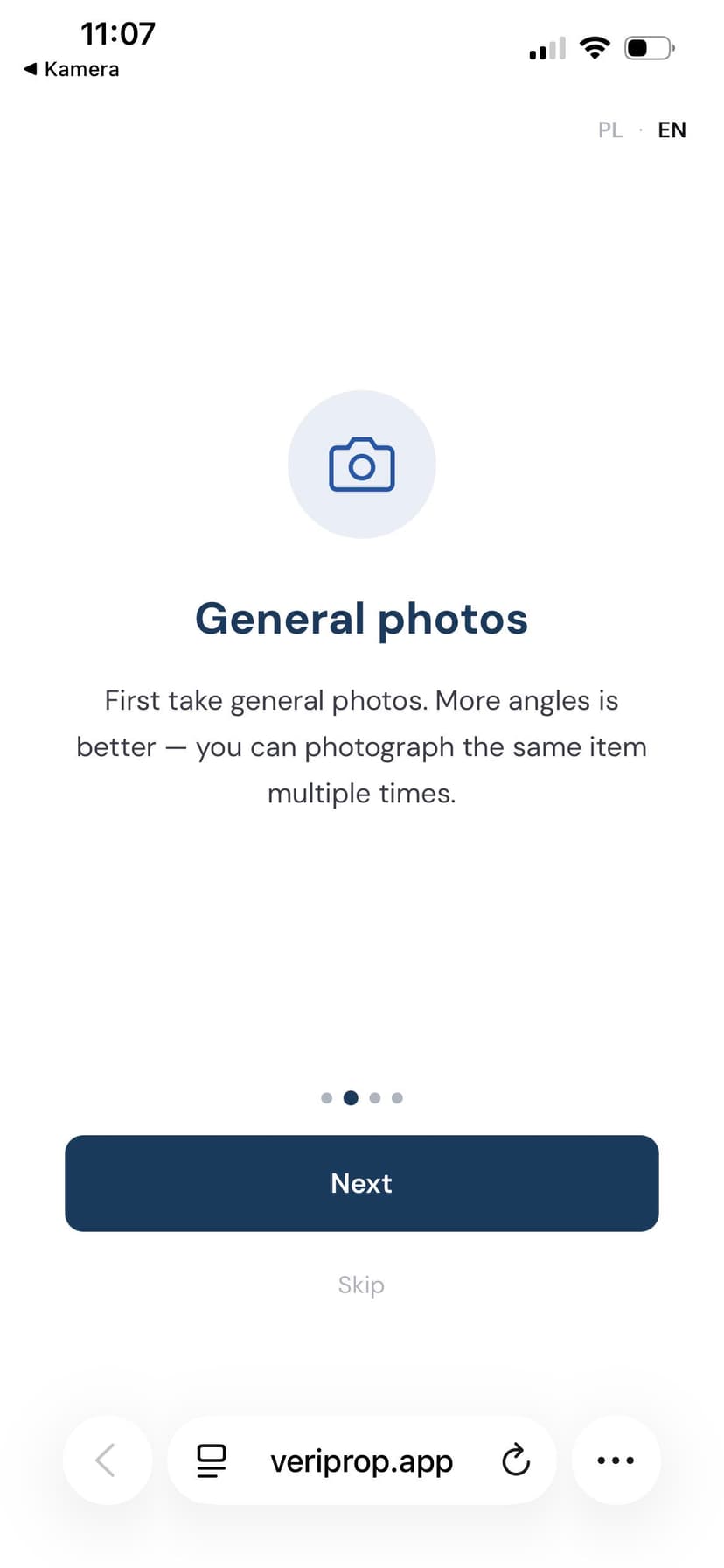
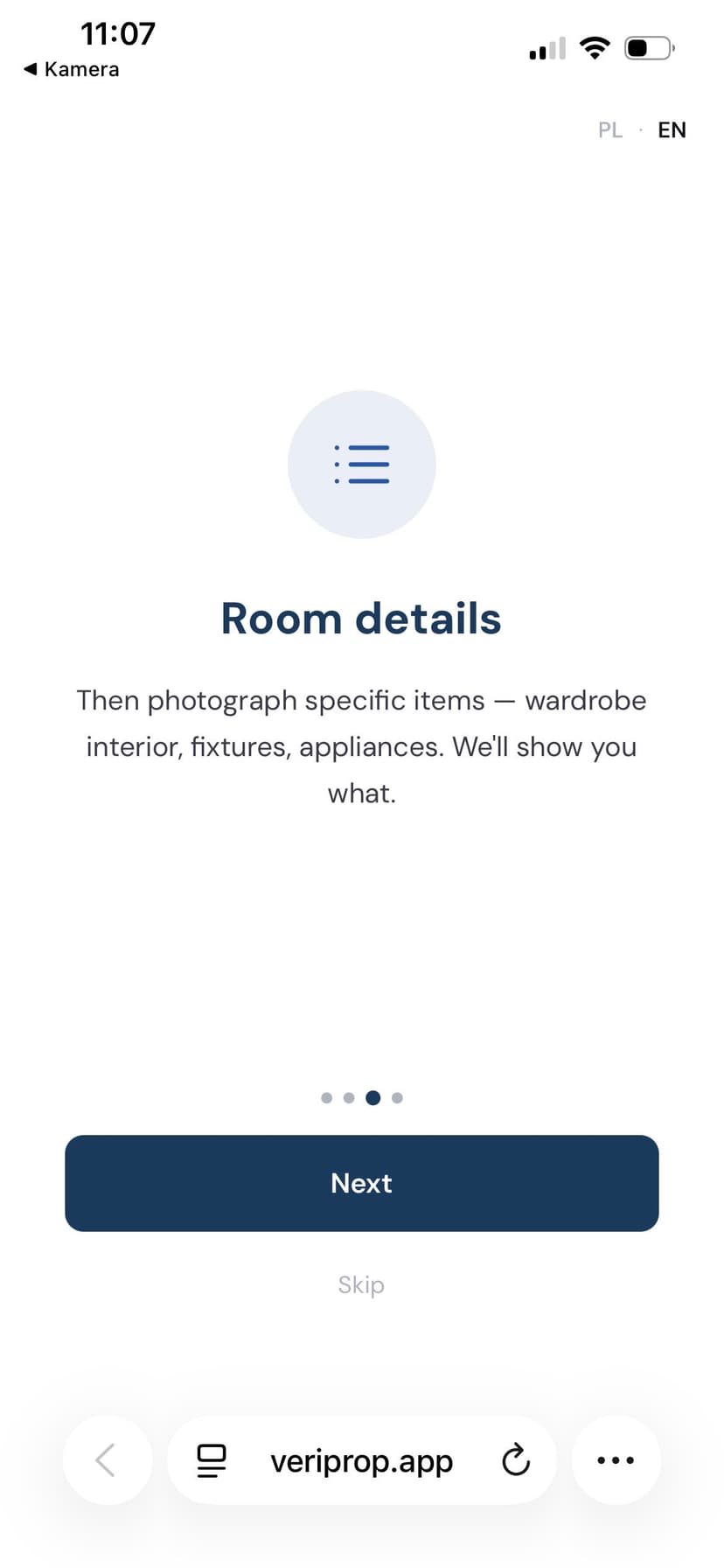
The entire flow runs in the browser. No app download. Tenants scan the QR on their door and complete documentation in about 5 minutes.
What we need from you.
Four things.
01
A building on the Autumn 2026 cycle
At least one building with a September or October 2026 move-in intake. Bed count is not a requirement.
02
Named operations contact
One person on your team leading the internal rollout. Single point of contact for configuration and the move-in wave.
03
Signed DPA before go-live
A data processing agreement before any tenant data is processed. VeriProp provides the template.
04
Primary documentation method
Commitment to run the move-in wave through VeriProp as the primary documentation method, not a parallel backup.
The Autumn 2026 cohort is open.
Reach out now. We configure your buildings in August and run the move-in wave with you in September.
Apply for the Autumn 2026 cohortcontact@veriprop.appQuestions?